The fifth edition of our annual What Workers Want survey gathers insights from thousands of employees across the UK to gauge their hopes, fears and priorities for 2026. From leadership and AI adoption to pay expectations and flexibility, the findings shed light on why 38% of workers say they're likely to seek a new role within the next 12 months.
Freedom over where, when and how work is done is the top reason employees stay. And as AI increasingly challenges what it means to contribute as a human, people are looking for greater meaning and enjoyment in their work, as well as leaders who can rise to that challenge.
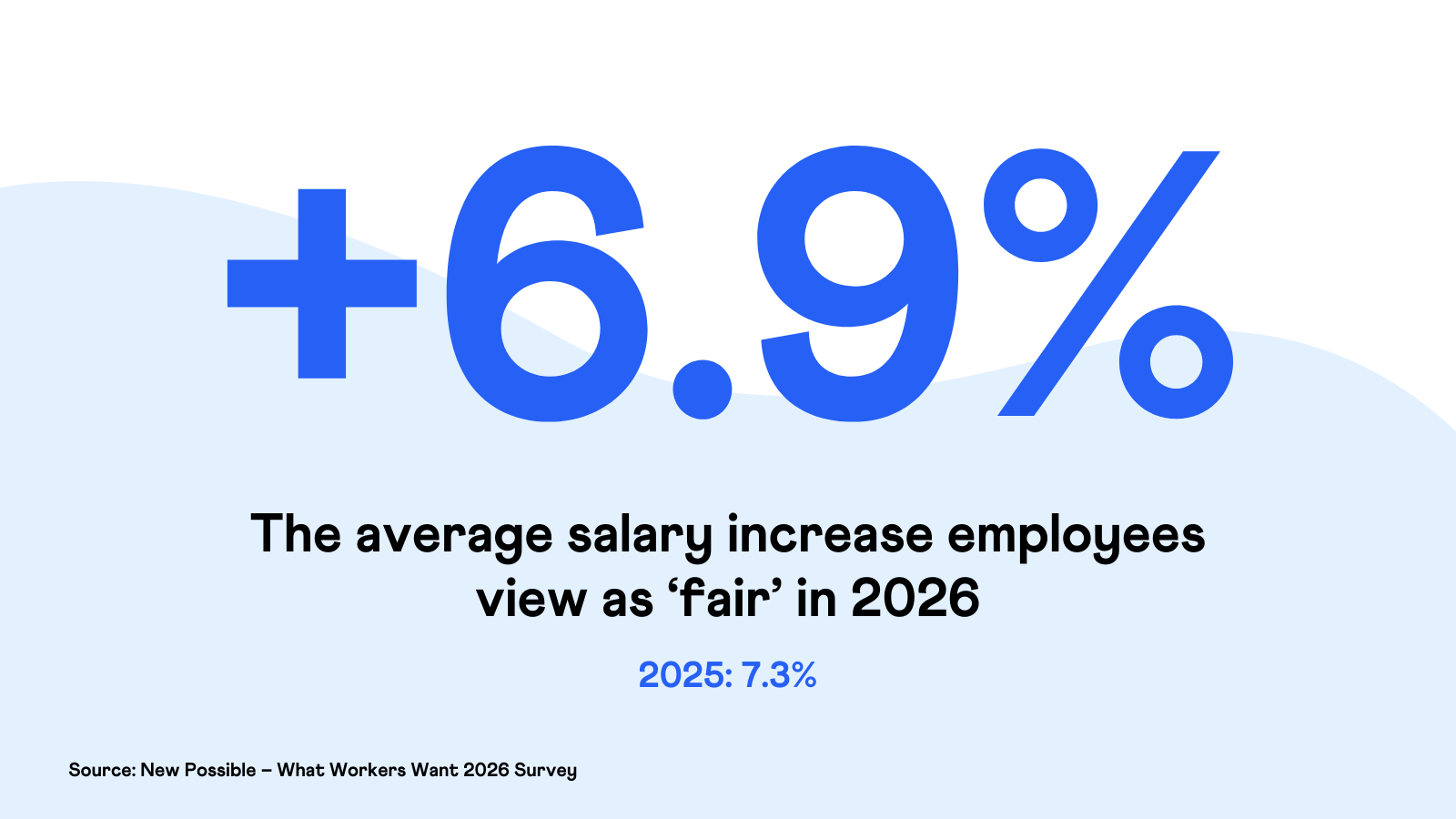
Pay expectations, although remaining high at +6.9% in 2026 (vs. +7.3% in 2025), are showing some signs of softening - a trend that is likely to continue as inflation slows and the impact of minimum wage increases settle.
We also find that employees are adopting AI faster than employers are enabling it - 39% of workers use AI at least weekly, while only a third of employers encourage its uptake (and just 24% offer training or guidance). Workers in marketing, technology and finance are leading its adoption.
Our findings slice the 2,029 UK responses by region, age and sector, revealing stark geographical and generational differences.
Key takeaways
- 38% plan to job‑hunt in 2026 (vs. 39% in 2025), with workers in hospitality (58%), media (50%) and retail (49%) among the most likely to leave.
- Flexible working is the top retention driver, cited by 31% of employees likely to stay.
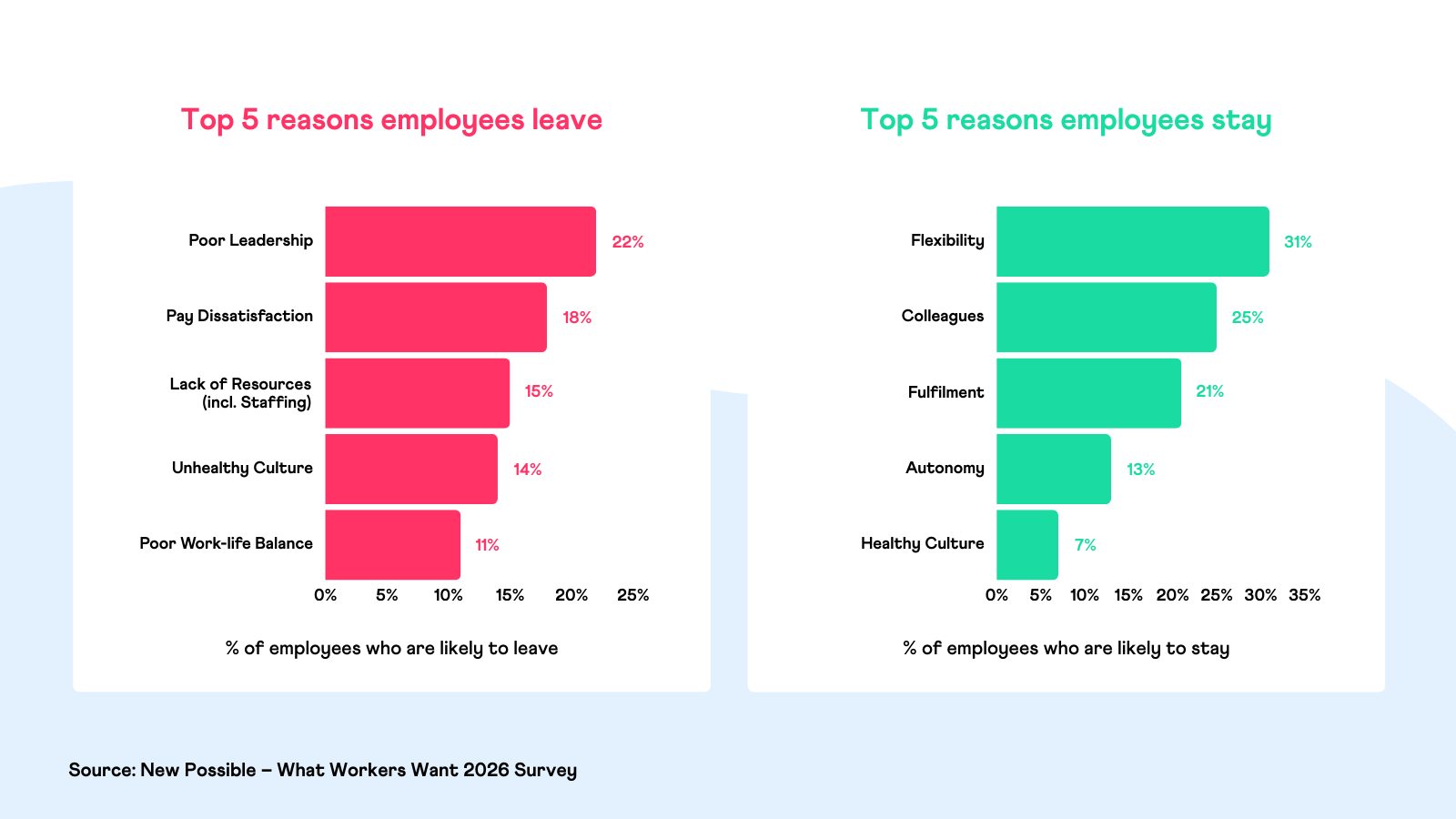
- Good colleague relationships (25%), fulfilling work (21%) and autonomy (13%) are also key reasons for staying.
- Dissatisfaction with leadership (22%) and an unhealthy workplace culture (14%) are top reasons employees say they’re likely to leave.
- Pay is mentioned by 18% of leavers, with an average 'fair' rise of +6.9% sought for 2026 (vs. +7.3% in 2025).
- A lack of resources (15%) and poor work-life balance (11%) are significant push factors.
- 26% report a decline in wellbeing over the past year, compared with 15% who say their wellbeing improved.
- 39% of employees now use AI daily or weekly - highest in marketing, technology and finance - yet only a third of employers encourage it, and just 24% provide training or guidance.
- Job satisfaction stands at 70%, with energy and creative arts leading, and hospitality and retail lagging.
- 53% of employees aged 18-34 say they are likely to leave within the next year, with pay cited as the dominant reason. Flexibility, colleague relationships and benefits are the strongest factors keeping them in post. As workers age, priorities shift: leadership quality and flexibility gain even more importance, while the oldest cohort (65+) places the greatest value on enjoying their work.
What motivates employees to stay in a role or jump ship?
This section examines employees’ free-text responses on the pros and cons of working for their organisation.
To structure the feedback, New Possible has developed and optimised (since 2021) a custom-built model that classifies comments into 20 themes. These classifications are then linked to each employee’s likelihood of leaving, revealing key drivers:
Freedom, connection and purpose are top reasons employees stay
Flexible working remains the strongest pull for employees, cited by 31% of those likely to stay - a theme explored later in this article. Good relationships with colleagues follow at 25%, and fulfilling work at 21%. Autonomy entered the rankings in 2025, mentioned by 13%. One worker called the “self-determination” of deciding “what I do and when I do it” the best part of their job.
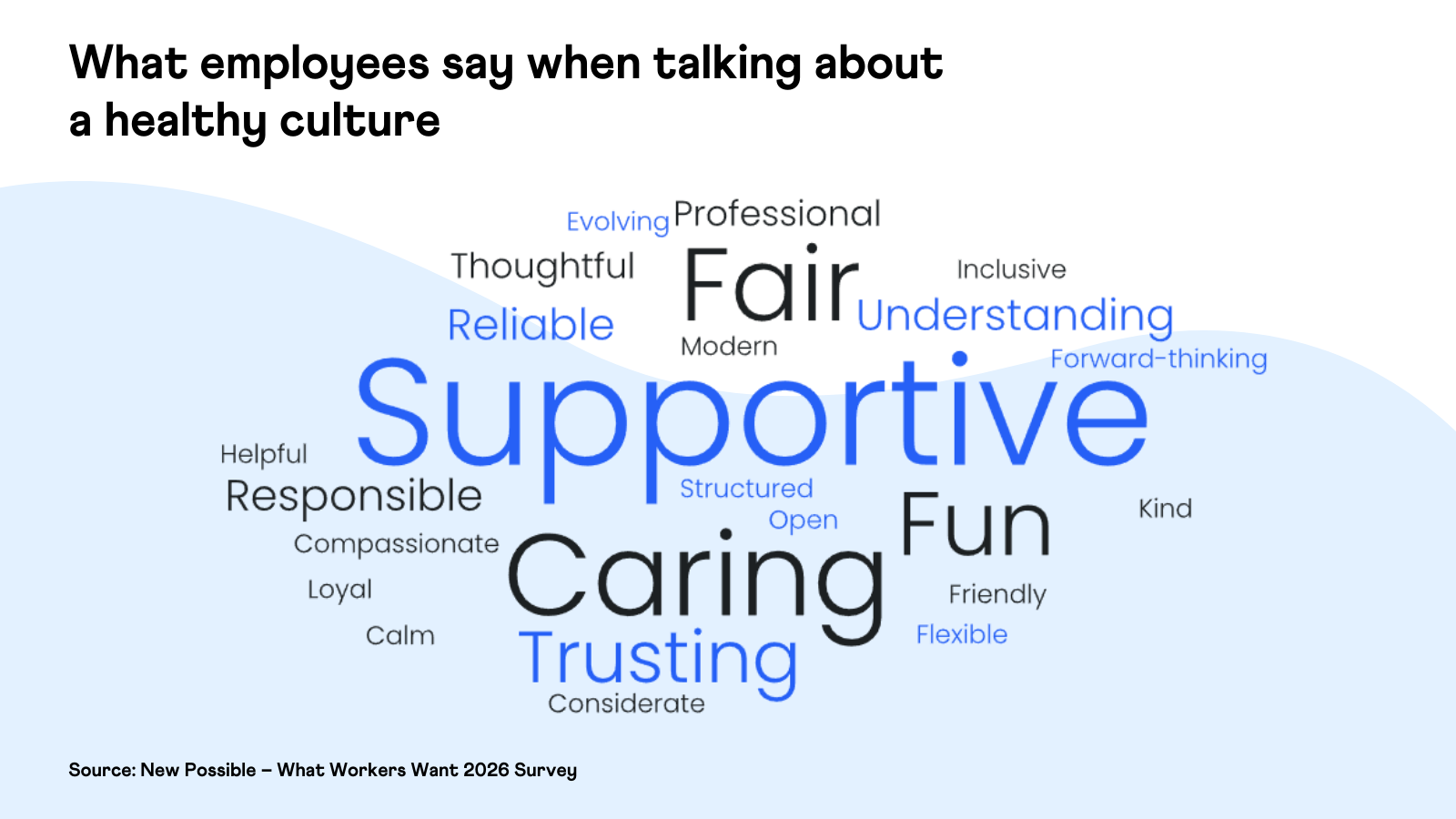
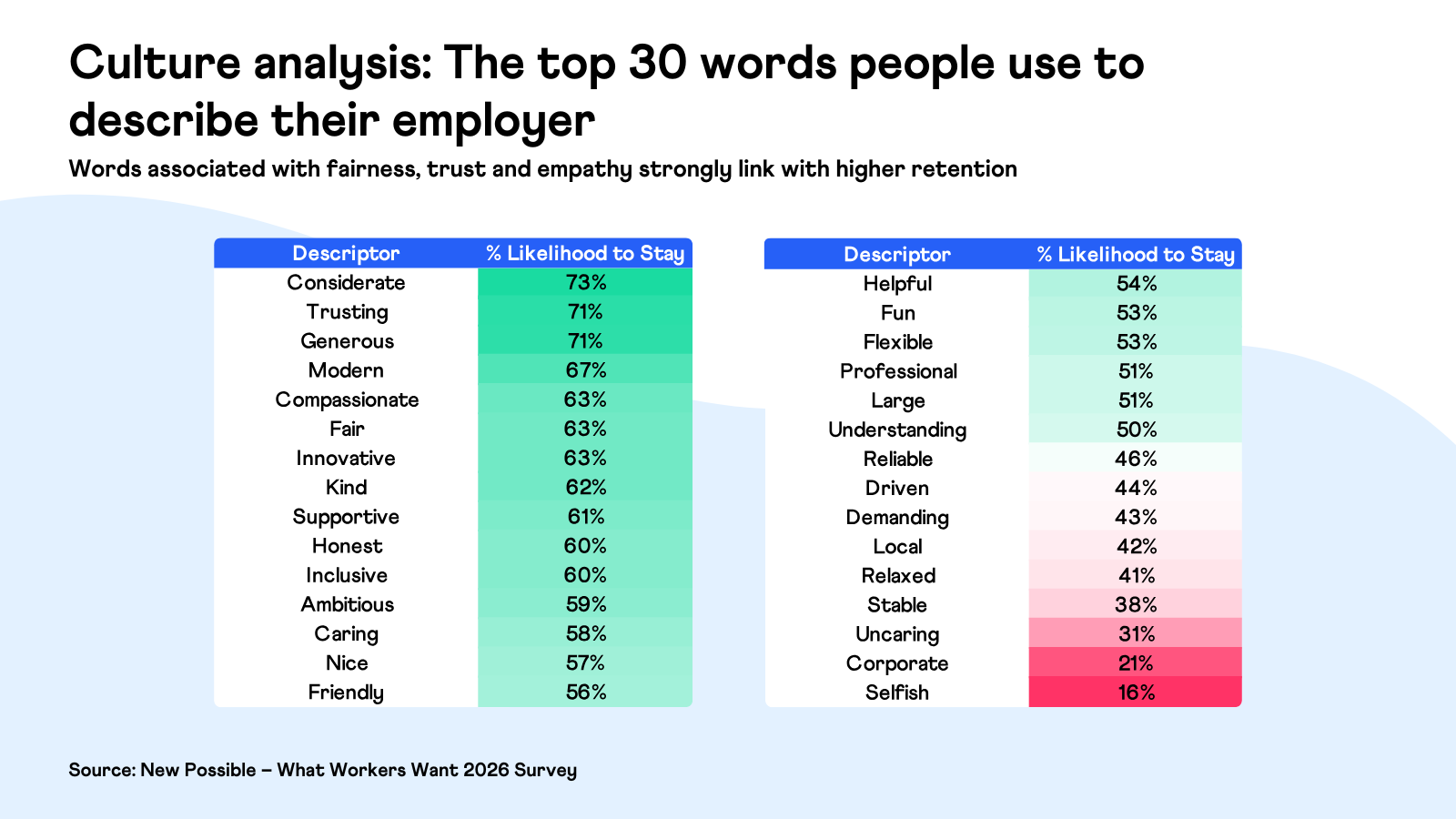
Healthy culture also features among the top five themes (7%), with 'supportive', 'fair', 'caring' and 'trusting' cultures valued highest by employees.
Benefits, though less discussed, were cited by 6% of those likely to stay. Which benefits matter most is explored later in this article.
Leadership, pay and burnout are top reasons employees leave
22% of employees considering leaving cited dissatisfaction with leadership. One lamented the “lack of clear direction from managers”, adding that confusion and poor communication created “unnecessary stress”, making the role harder than it should be - even if the work itself was rewarding.
Pay remains a sticking point. On average, workers viewed a 6.9% rise in 2026 as 'fair', down slightly from 7.3% in 2025. Expectations were highest in hospitality (+8.3%), sales (+8.2%), creative arts and design (+7.8%) and retail (+7.6%). With inflation cooling and the National Living Wage set to rise, pay expectations may be starting to moderate.
Feeling underpaid often coincided with feeling overworked. 15% of would-be leavers complained about a lack of resources; 11% pointed to poor work-life balance. While many called for more staff, others suggested streamlining processes.
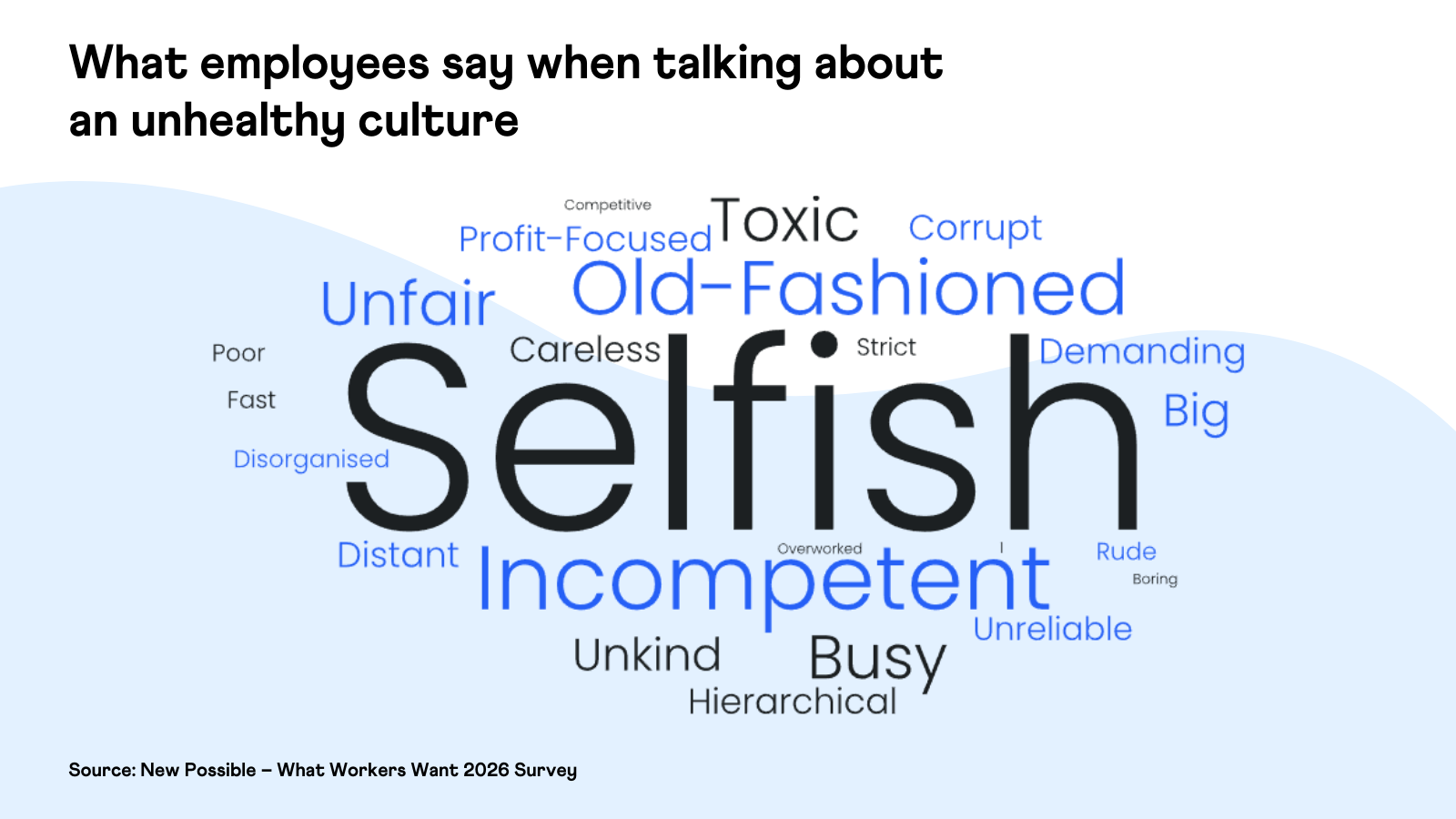
Culture also matters. Unhealthy culture ranked among the top five complaints, cited by 14%. Words such as 'selfish', 'incompetent', 'old-fashioned', 'toxic' and 'unfair' cropped up frequently.
Smaller but notable themes included wellbeing concerns (9%), particularly high stress levels. A lack of career progression was cited by 8% of those likely to leave.
What makes a healthy culture?
Culture is multi-dimensional - most organisations are described using a mix of positive and negative terms. For example, a firm labelled ‘fast-paced’ might also be seen as ‘stressful’ and ‘challenging’. For a company like SpaceX, that blend could be desirable. Some descriptors carry more weight than others: being called ‘old-fashioned’ is far less impactful than being branded ‘toxic’.
The graphic below shows the top 30 words used to describe organisations and their association with an employee’s likelihood to stay. Companies described as ‘considerate’, ‘trusting’ and ‘generous’ tend to have the most loyal employees, while those seen as ‘uncaring’, ‘corporate’ or ‘selfish’ are linked to a higher likelihood of leaving. This is perhaps unsurprising - offering employees freedom in where, when and how they work (top drivers of loyalty) requires a culture that's both trusting and empathetic.
Flexible hours and working from home are the benefits employees value most
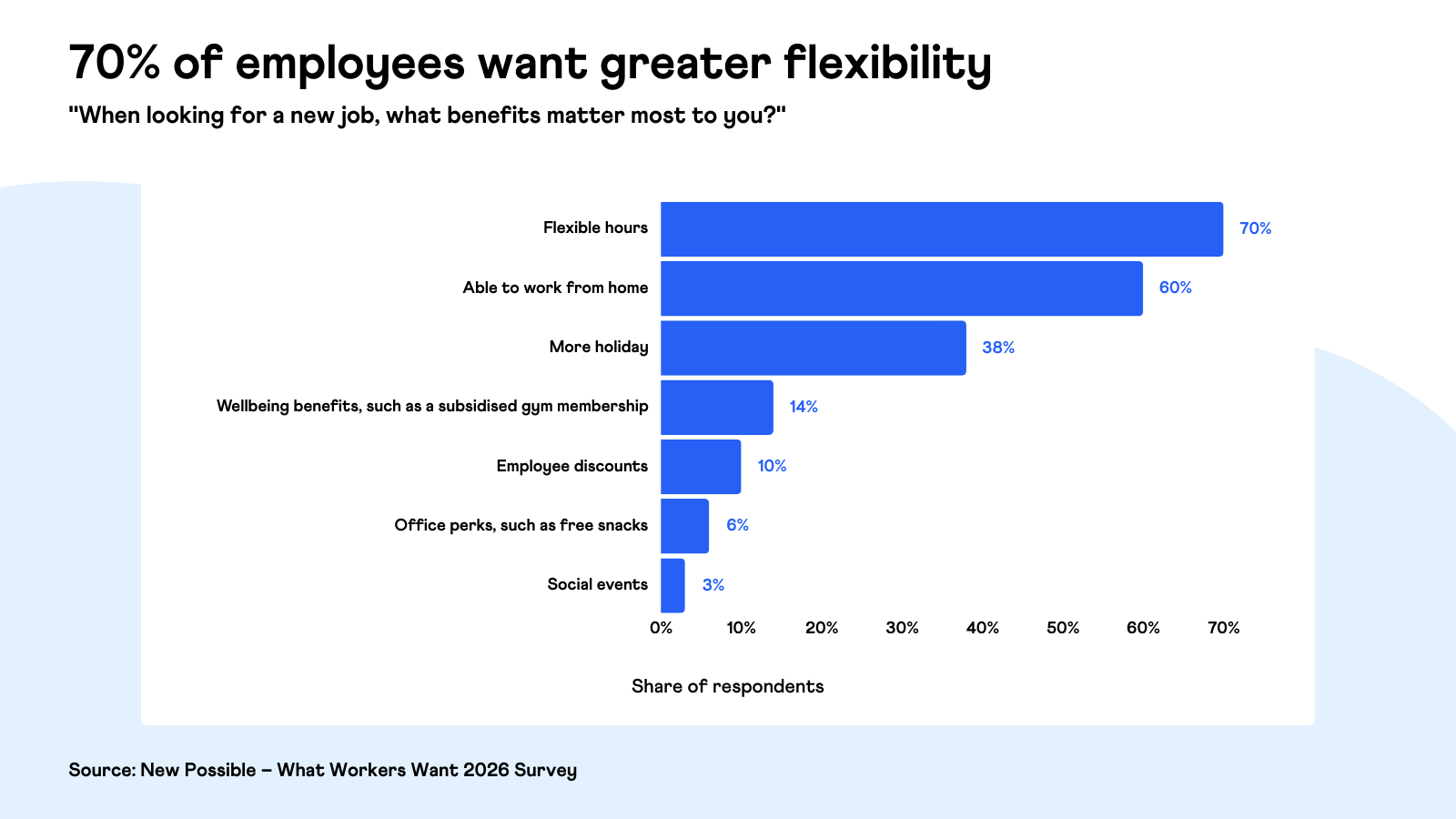
Jobseekers prize flexibility above all. 70% want adaptable hours, and 60% seek the option to work from home. Extra holiday appeals to 38%.
Preferences diverge by age. Those aged 18-24 are far keener on social events (9%) and office perks (12%). Among 18-34 year-olds, one in five values wellbeing benefits such as a subsidised gym membership. The 25-34 cohort shows the strongest preference for working from home (68%), while 35-44s are most likely to prioritise flexible hours (74%). Older workers, by contrast, are less keen on remote work: 48% of those aged over 55 prioritise it.
Flexible working is a major predictor of retention
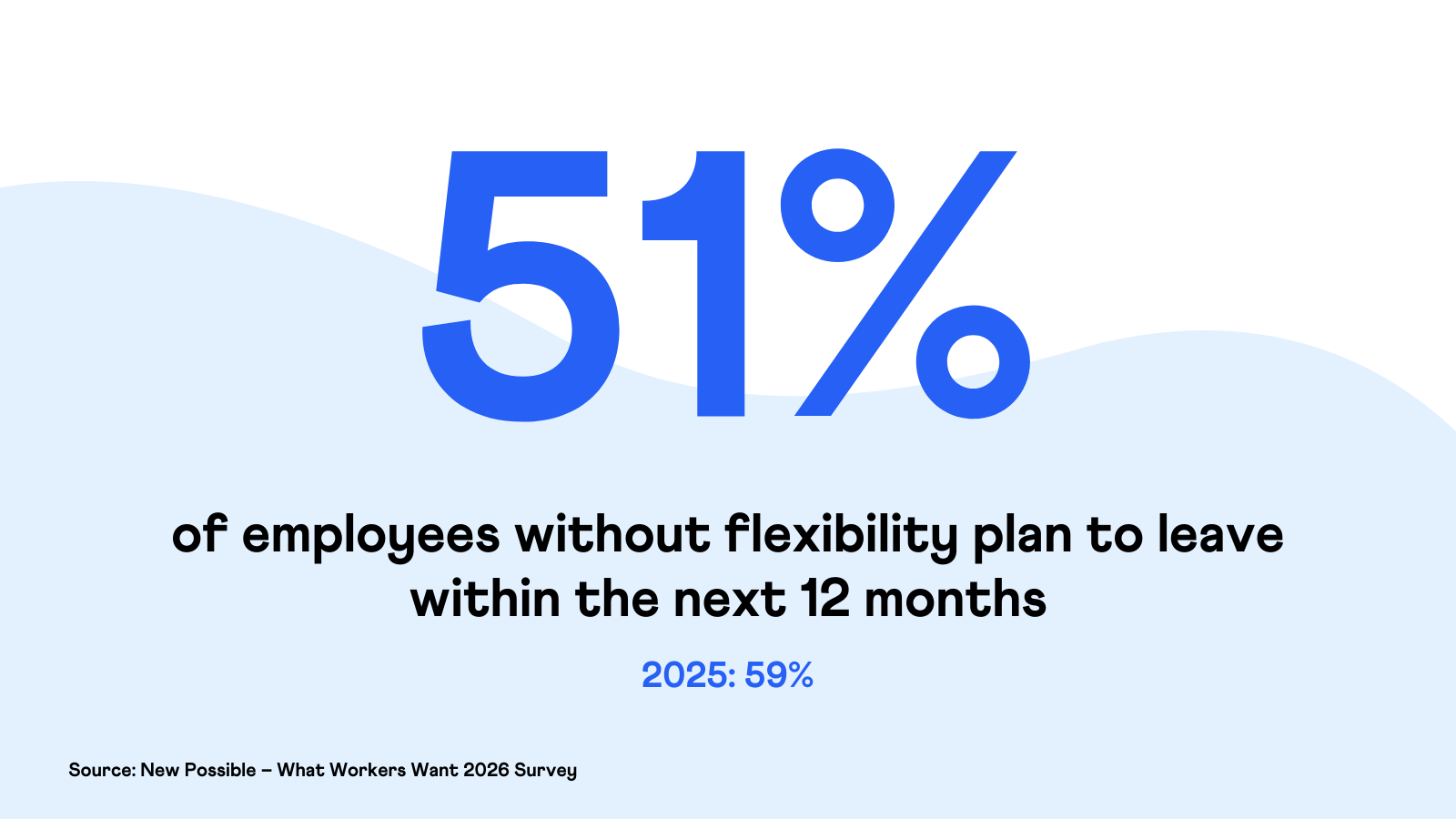
51% of employees without flexibility plan to seek a new role within the next year - 16% higher than those with flexibility. It’s clear that flexibility in working hours and location remain top of mind for many.
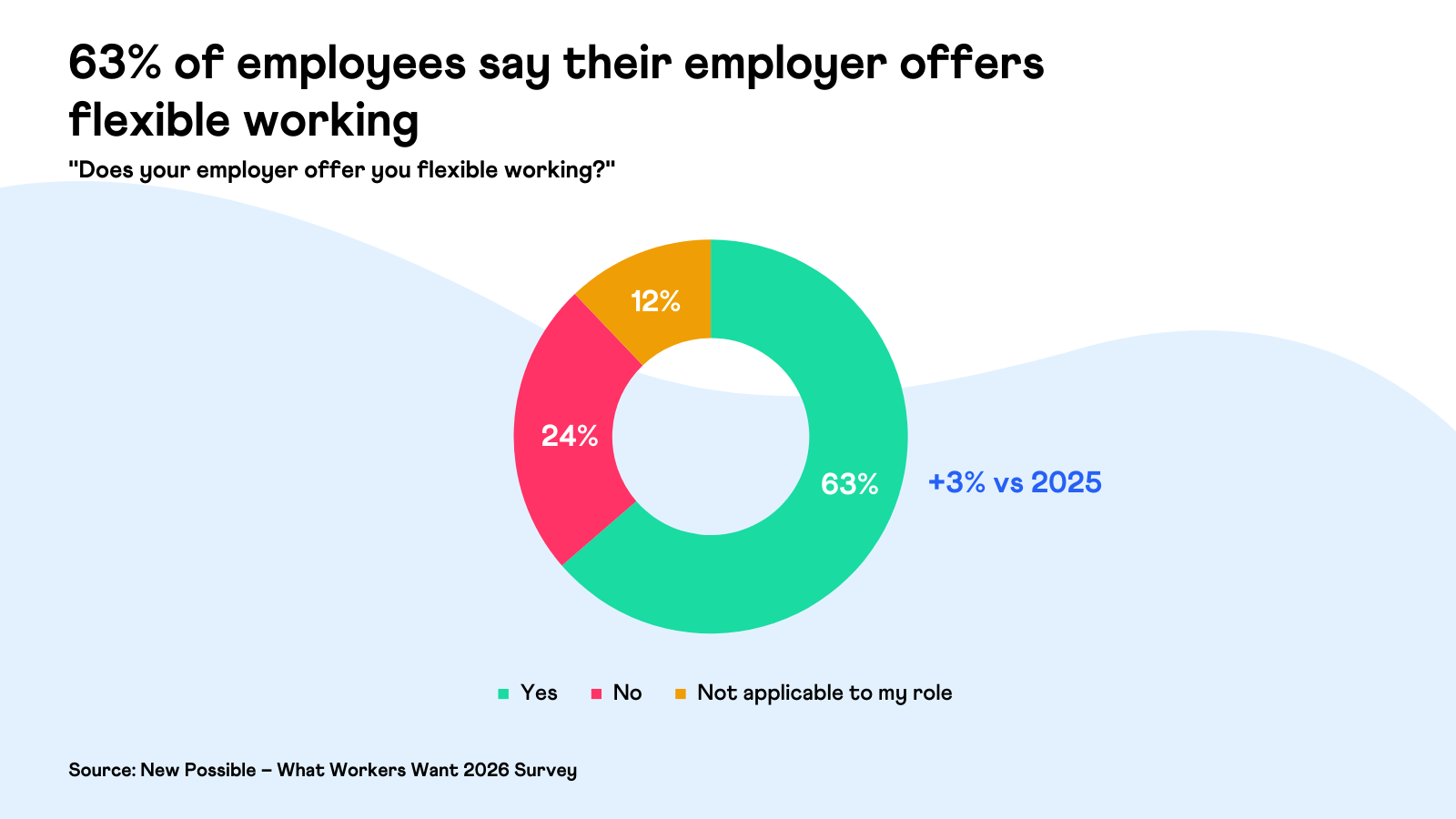
While 63% of employers now offer flexible working - a 3% increase on 2025 - long commutes, excessive mandatory office days, limited support for childcare and restricted annual leave remain common pain points for employees, even for those with flexible arrangements.
26% of employees say their wellbeing has worsened over the past year
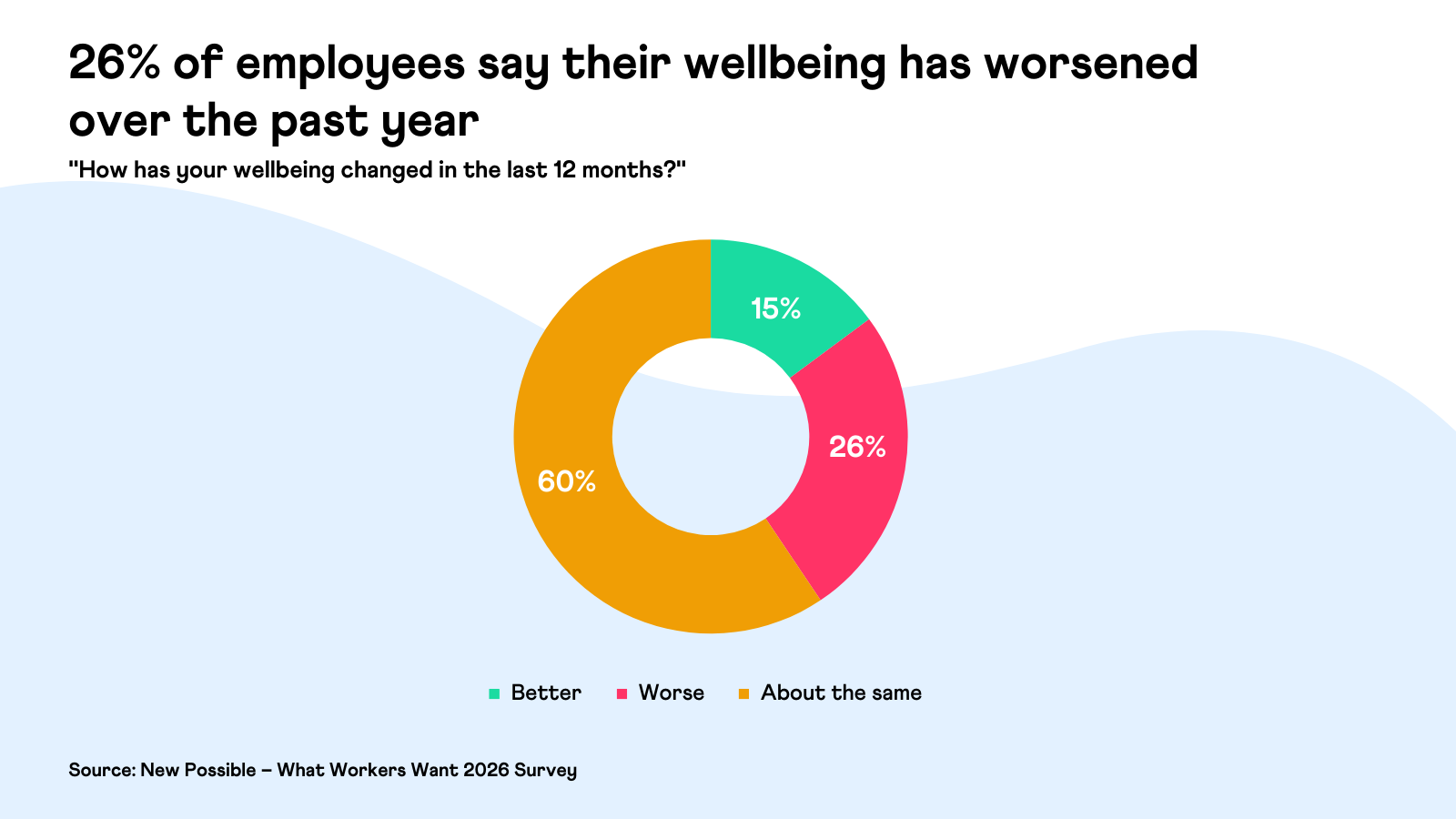
26% of employees report a decline over the past year (vs. 30% in 2025). For the majority - 60% - there has been no change.
Media workers were most likely to report a decline in wellbeing, with 45% saying it had worsened, followed by those in science and pharmaceuticals (40%), engineering and manufacturing (33%) and healthcare (32%).
Employees are adopting AI faster than employers are enabling it
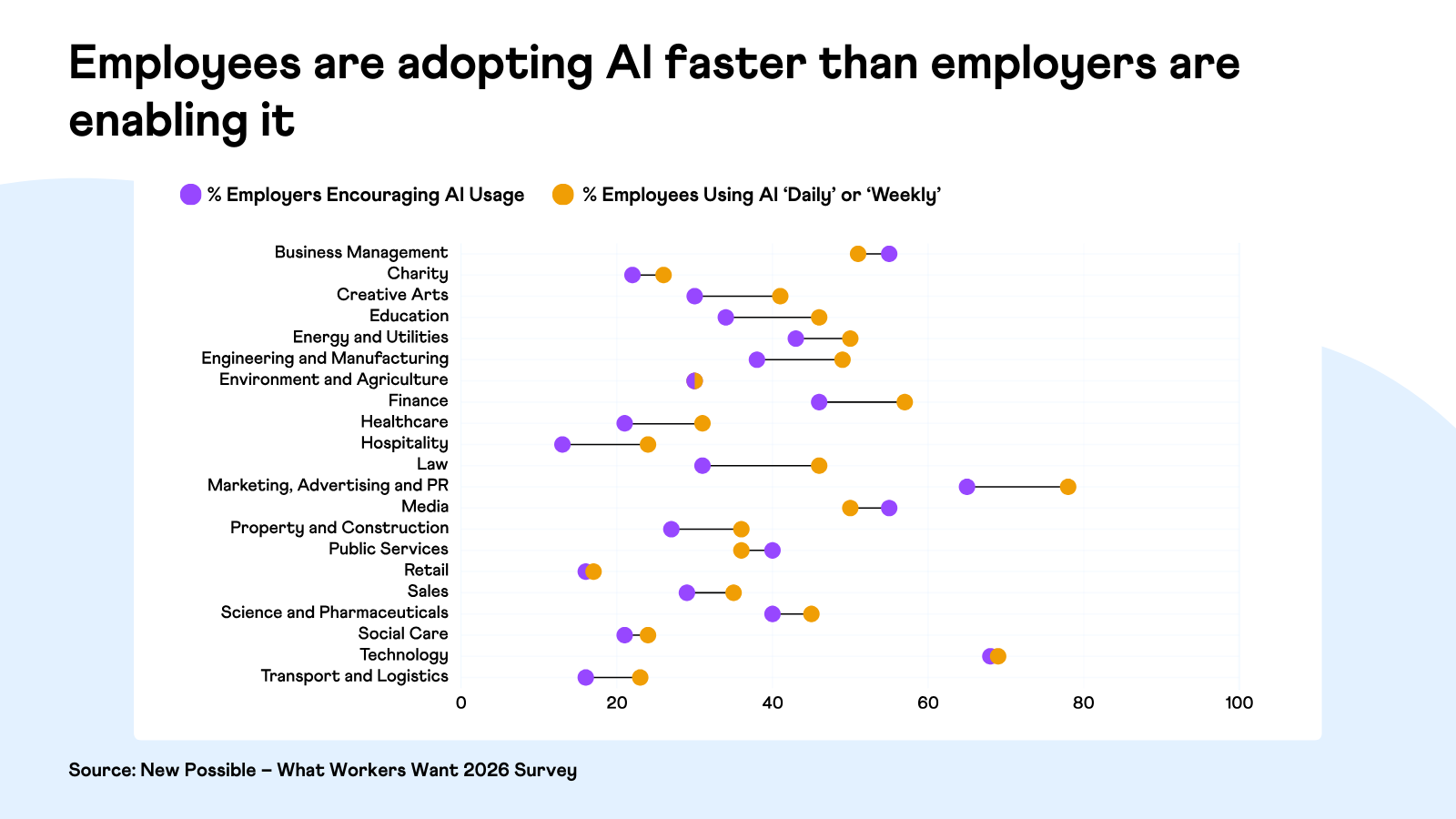
39% of employees now use artificial intelligence on a daily or weekly basis. Adoption is highest in marketing (78%), technology (69%) and finance (57%). Employers, however, lag behind: only a third actively encourage its use. The gap is most pronounced in law (15%), marketing (13%) and education (12%).
Training is even scarcer. Although one in three firms promotes AI, just 24% have offered staff any training or guidance.
The gap is likely less about resistance and more about readiness. Many employers are still working out governance, risk, and capability frameworks, while employees are already experimenting at pace.
As one teacher put it, AI is having a "dramatic impact on both teachers and students - we need to adapt now or face huge consequences in the future".
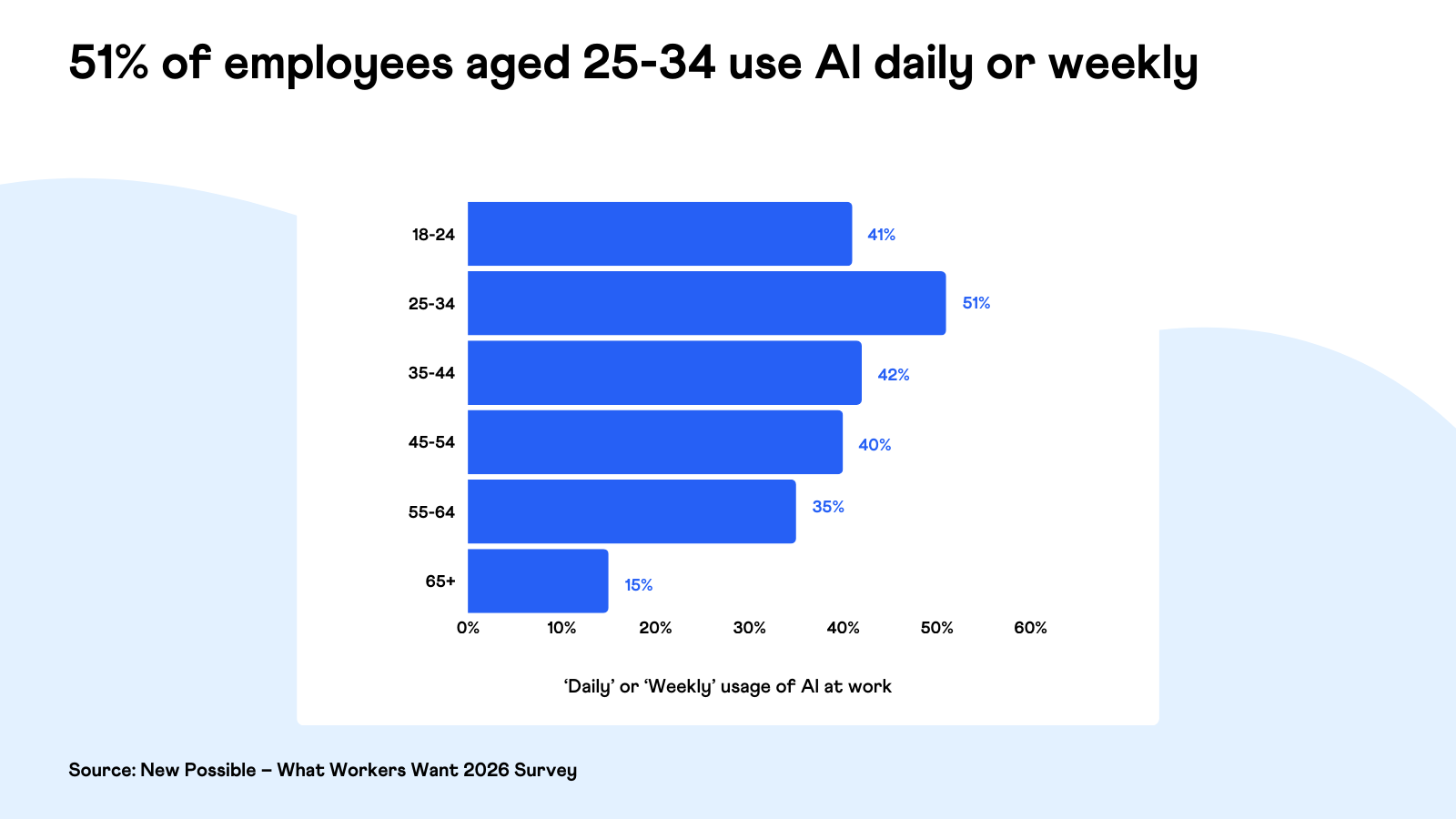
Young workers are the keenest adopters of artificial intelligence. More than half of those aged 25-34 use it daily or weekly, compared with just 35% of 55-64 year-olds. Geography matters too. Northern Ireland, London and the South are ahead, while Scotland, Wales and the East of England trail behind.
Workers are generally upbeat when talking about AI
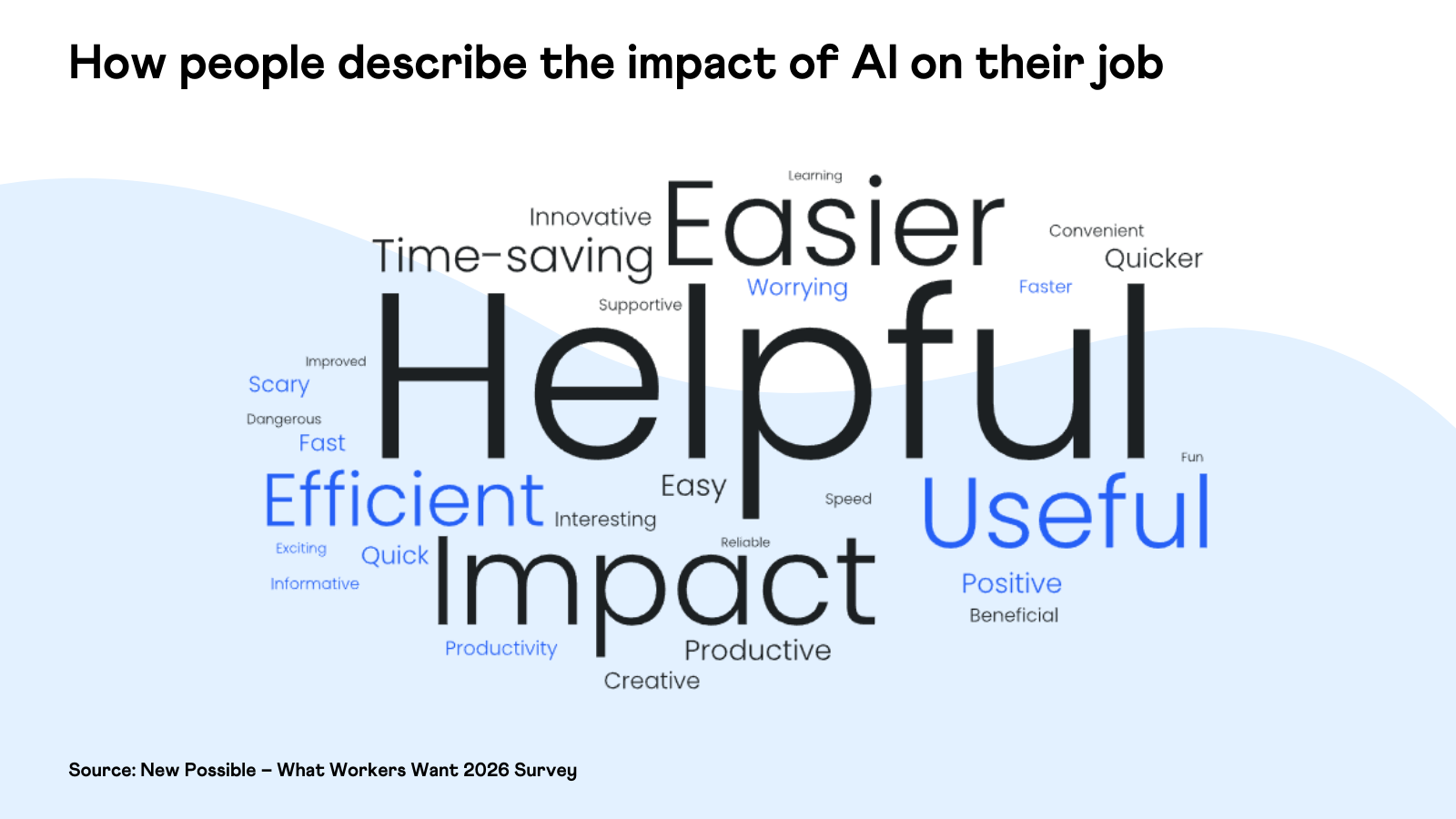
Those who use artificial intelligence tend to be positive. They call it 'helpful', 'impactful' and 'useful', crediting it with making work easier and boosting efficiency. The language of utility, rather than fear, suggests most employees see AI as an ally, not a threat.
14% of employees think they are at risk of redundancy in the next 12 months
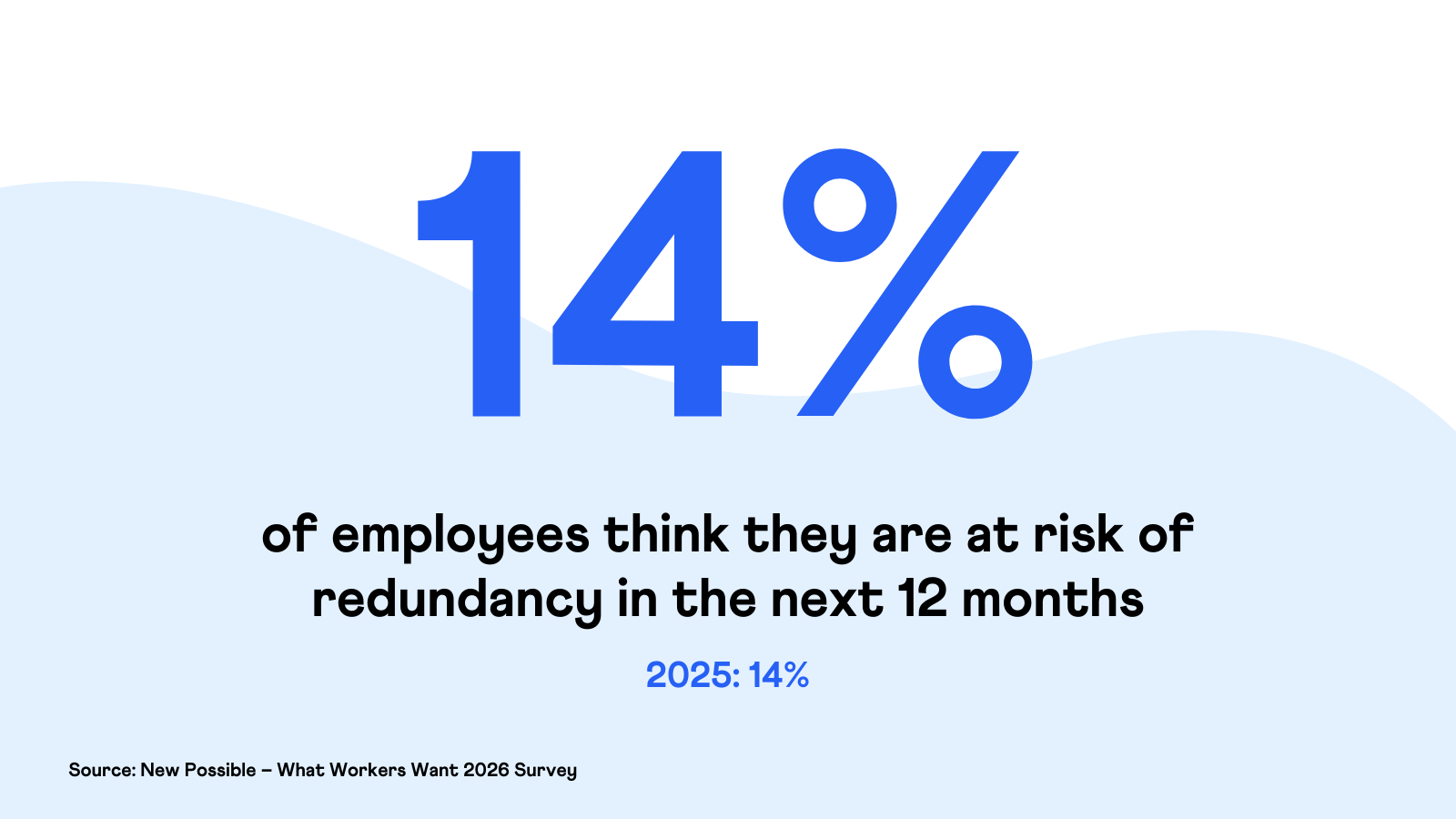
14% of employees fear redundancy within the next year - a figure unchanged from 2025. Anxiety is highest in technology, where 32% feel at risk, followed by media (25%) and the science and pharmaceuticals sector (25%).
Is there a link between AI adoption and job security?
Employees who use AI tools daily or weekly report somewhat higher levels of perceived job insecurity. This is reflected in a moderate positive correlation (+0.46). In practical terms, more frequent AI users tend to feel slightly more concerned about their job security - not because AI is necessarily replacing them today, but because increased exposure to these tools makes change feel more imminent.
Please note: Correlation ranges from -1 to +1. A correlation does not demonstrate causation.
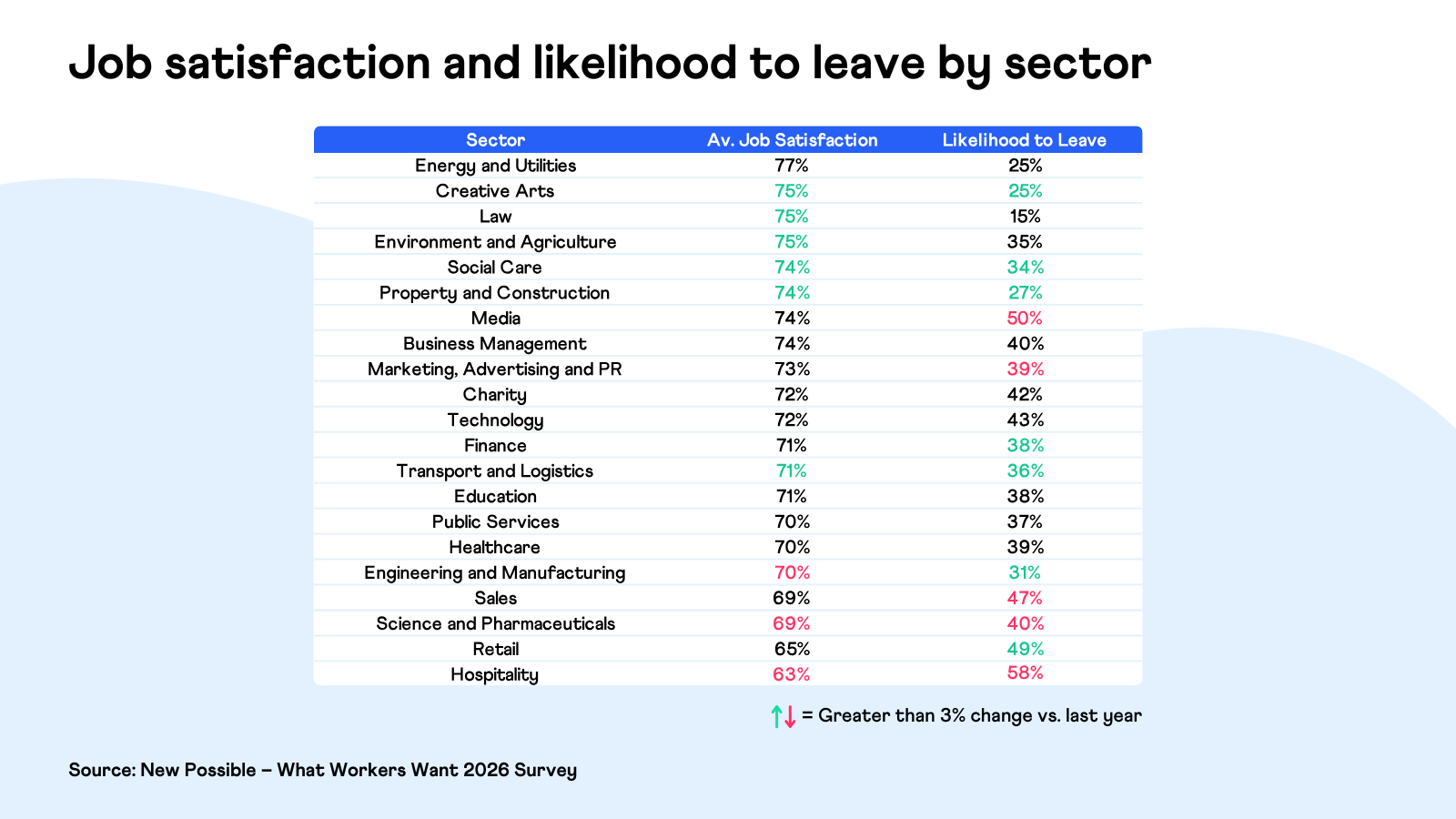
Job satisfaction holds steady at 70%
Energy and utilities top the satisfaction rankings, followed by creative arts, where workers often praise roles that are both flexible and rewarding. At the opposite end, hospitality records the lowest satisfaction, with discontent centred on poor work–life balance and frustration with leadership. Retail also underperforms, where dissatisfaction is primarily driven by leadership, workload intensity, and pay.
Generational priorities in the labour market
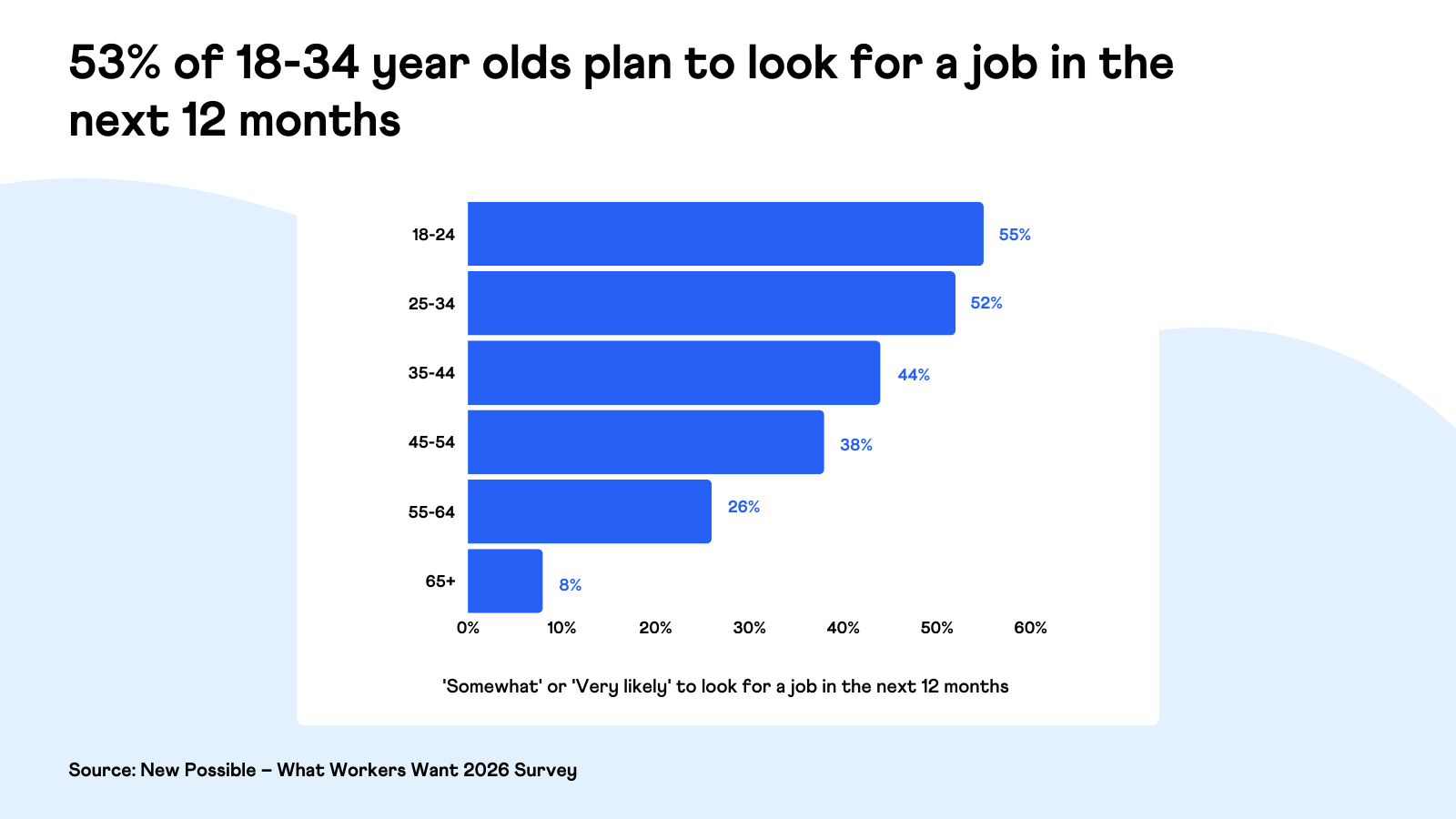
53% of employees aged 18-34 say they are likely to leave within the next year, with pay cited as the dominant reason. Flexibility, colleague relationships and benefits are the strongest factors keeping them in post. As workers age, priorities shift: leadership quality and flexibility gain even more importance, while the oldest cohort (65+) places the greatest value on simply enjoying the work they do.
About New Possible
New Possible is the people insight platform that’s committed to your success. We work with a range of sectors to provide clear, actionable, and benchmarkable insights across the employee journey. Read about our mission, or book a demo to learn more.
If you’d like to discuss this research further, please email hello@newpossible.io or call 0161 706 0618.
Notes
New Possible’s What Workers Want findings include responses from 2,029 UK employees captured between 14 November and 13 December 2025. Of these, 46% were gathered via a representative consumer panel, 33% through a public survey, and 21% from the New Possible platform. The research was conducted by Nate Harwood and Ava Kaveh.