New Possible’s British Recruitment Awards sets out to discover and celebrate the organisations that are truly passionate about recruitment’s role in building a thriving organisation.
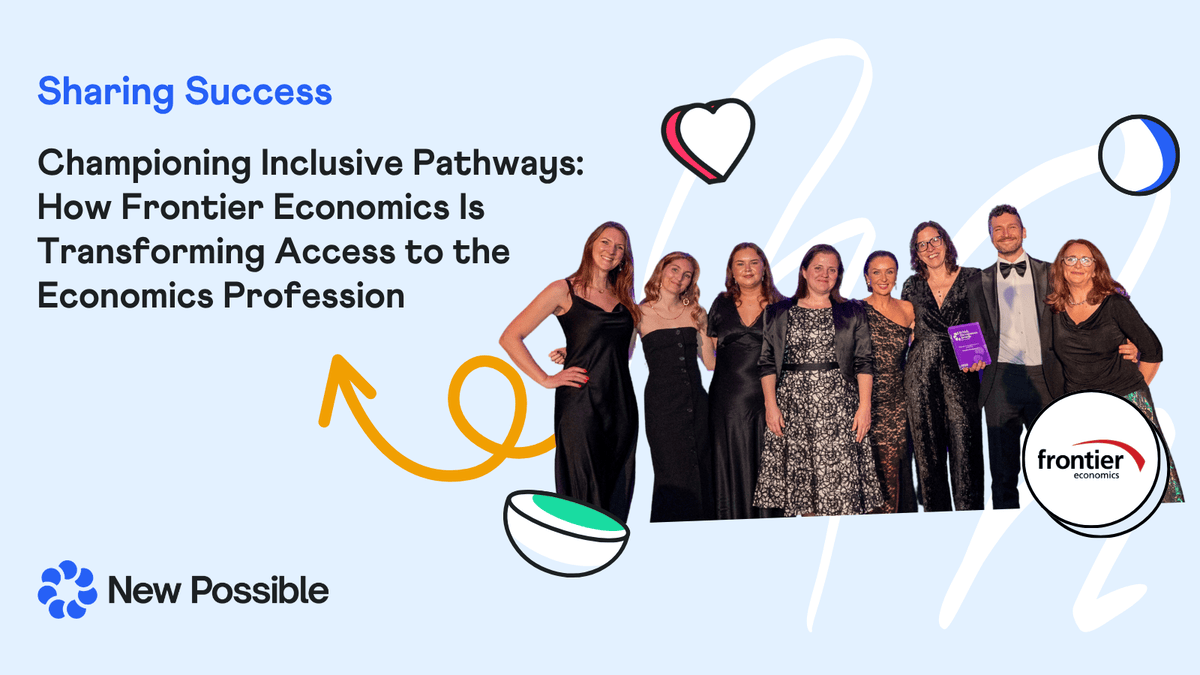
In our ‘Sharing Success’ series, we interview British Recruitment Awards Winners to shine a light on the inspiring projects that are improving workplaces across the UK and beyond. In this article we interview Lucy Tobin at Frontier Economics, winners of the ‘Diversity & Inclusion Initiative of the Year’ and ‘Talent Acquisition Strategy of the Year’ categories.
Introducing Lucy Tobin
Lucy is the Chief People Officer at Frontier Economics and is responsible for People & Culture strategy. Lucy shared “I lead a brilliant team who are instrumental in driving innovation in how we attract, support, and grow talent. This includes Tara McCallum, our Recruitment Manager, and Jennie Hodgeson, our Graduate Lead - both of whom report to our People Director, Nick Sharkey. Together, they’ve been central to many of our most impactful initiatives in inclusive recruitment.”
About Frontier Economics
Frontier Economics is a leading consultancy tackling complex questions for businesses and governments. They go beyond the numbers to uncover what’s really happening, delivering clear, honest advice that drives better decisions and results. Over 25+ years, they’ve become a trusted partner to major organisations, shaping policies in telecoms, digital, energy, and healthcare. Their insights influence regulation, competition policy, and strategic decision-making. As an employee-owned firm with around 500 staff across nine European offices, Frontier’s unique structure fosters alignment, innovation, and collaboration. At Frontier, they combine economic rigour with clarity to create real impact across sectors, industries, and society.
The challenge
At Frontier Economics, people are both the business and its shareholders, making inclusion, development, and diversity fundamental to long-term success. Recognising that economics continues to face deep-rooted representation gaps - particularly for women and ethnically diverse talent - Frontier set out to tackle the issue at its source. The firm acknowledged that hiring alone cannot solve a pipeline problem and instead adopted a long-term, proactive approach to widening access to the profession.
When asked why promoting diversity amongst economists is such a priority, Lucy highlighted: “Economics shapes the way societies function - it informs public policy, business decisions, and the services people rely on. If our profession isn't representative, we risk blind spots in analysis and decision-making. At Frontier, we believe diversity is essential to delivering robust, balanced, and relevant economic advice. It strengthens challenge and creativity within our teams and improves the quality and impact of our work for clients and for society.
To quote Andrew Leicster, one of our Executive Directors who has been a key champion of Frontier’s work in this space: “Economics is such a fascinating subject with the power to have real impact, and the more we can all do to ensure it is seen as a way to have a brilliant, fulfilling career by as many talented people as possible, the richer we will be as a profession.”
The response
Targeted Work Experience Programmes: Hosted bespoke experiences, including the Black Heritage Insights Programme (in partnership with The Black Economists Network) and a programme with the Social Mobility Foundation, engaging over 30 students.
- 10,000 Black Interns Programme: Delivered jointly with a competitor firm, providing insight into economic consulting and building tangible routes into the profession.
- Debate Mate Partnership: Introduced economics to local schools, tackled economic disadvantage, and developed skills among underrepresented students.
- Strategic Partnerships: Collaborated with Women in Economics and the Royal Economic Society to extend reach and address structural barriers.
- Economics First Apprenticeships: Launching the UK’s first economics consultancy apprenticeship, recruiting school leavers and funding undergraduate degrees.
- Inclusive Recruitment Training: Trained all hiring managers in inclusive selection techniques, sharing interview questions in advance to support neurodiverse candidates.
We asked Lucy how the Economics Apprenticeships programme was developed, and what impact they hoped it would have. Lucy responded:
“It’s widely recognised - by us and by key partners like the Royal Economic Society - that diversity in economics is held back by structural issues in the education pipeline. Their 2023 report highlighted how early decisions, such as subject selection, can exclude capable students long before recruitment begins: Who Studies Economics? – RES Report.
Our Apprenticeships programme was born out of the realisation that we can’t fish from a pool that doesn’t exist and the gap was starting earlier than we thought. Traditional pathways often exclude talented individuals who don’t have access to the “right” networks, schools or academic support. This initiative - led by Jennie Hodgeson with support from Nick Sharkey - enables us to recruit school leavers directly, fund their undergraduate degrees, and give them hands-on exposure to economic consulting.
We also learned from other organisations with successful models and want to pay that forward by sharing our learnings. Ultimately, this is about removing the “paper ceiling” and ensuring talented individuals aren’t excluded by structural barriers beyond their control.”
What does inclusive recruitment training for hiring managers involve?
Lucy commented: “Designed by our Recruitment Manager, Tara McCallum, the training equips hiring managers with tools for inclusive, skills-based hiring. It focuses on recognising and mitigating bias, designing structured assessments, and making evidence-based decisions.
A particularly impactful change has been sharing interview structures and questions in advance. This supports neurodiverse candidates and levels the playing field, ensuring we're assessing capability, not confidence or cultural familiarity with corporate norms. It’s about removing “gotchas” and giving every candidate the opportunity to show their best.”
The impact
- Women represented 53% of intern hires and 53% of analyst hires
- 47% overall female representation across the firm
- 75% of business management teams are female
- Achieved 40% female manager target early
- Board composition (Oct 2025) will be 60% female with 20% ethnically diverse
- Two work experience participants secured paid internships
- Programme feedback highlighted increased confidence and interest in pursuing economic consultancy careers
We asked Lucy which initiative she felt had the greatest impact so far, and why. Lucy mentioned:
“While no single initiative is a silver bullet, our targeted work experience programmes have had profound impact. These provide opportunities to introduce more than 30 students each year, many of whom had never considered economics, to the profession. Some have gone on to join us as interns, others have pursued economics elsewhere. That shift - from “I hadn’t thought of this” to “I can see myself here” - is exactly the outcome we want.
These programmes have been shaped by Jennie and Amy Farrell in our graduate team, with the support of our consultants across the firm. For example, our Executive Director, Jon Adlard, has volunteered with schools for over 10 years. We also partner with Debate Mate, who teach debating skills - often a private school privilege - to students from state schools. This opens the door to conversations about economics and gives young people the confidence to picture themselves in the field. Whether they join us or take another path, a more diverse profession benefits everyone.”
Through this inclusive, pipeline-led strategy, Frontier Economics has redefined talent acquisition by not just hiring exceptional people, but by actively widening access to the profession itself.
What advice would Lucy offer to other organisations tackling similar challenges in their sector?
“Start earlier and think wider. Hiring reforms alone can’t fix structural inequities if the pipeline is limited. Engage with schools, partner with charities, and consider alternative entry routes like apprenticeships.
Be prepared to invest time and measure success over the long term. And most importantly, make it a whole-organisation effort. Real change happens when recruitment, leadership, and colleagues at every level are united in the belief that diversity and inclusion are essential to excellence.”
Overall, the judges praised ‘fantastic initiatives that will make a difference in the long term’ as well as 'excellent results’.
The British Recruitment Awards is powered by New Possible, the employee insight platform that's committed to your success. New Possible helps leaders build healthier organisations by providing meaningful insight that can drive real change. Find out more about our mission or book a demo.