New Possible’s British HR Awards sets out to discover and celebrate the teams and individuals who are truly passionate about delivering a world-class people experience.
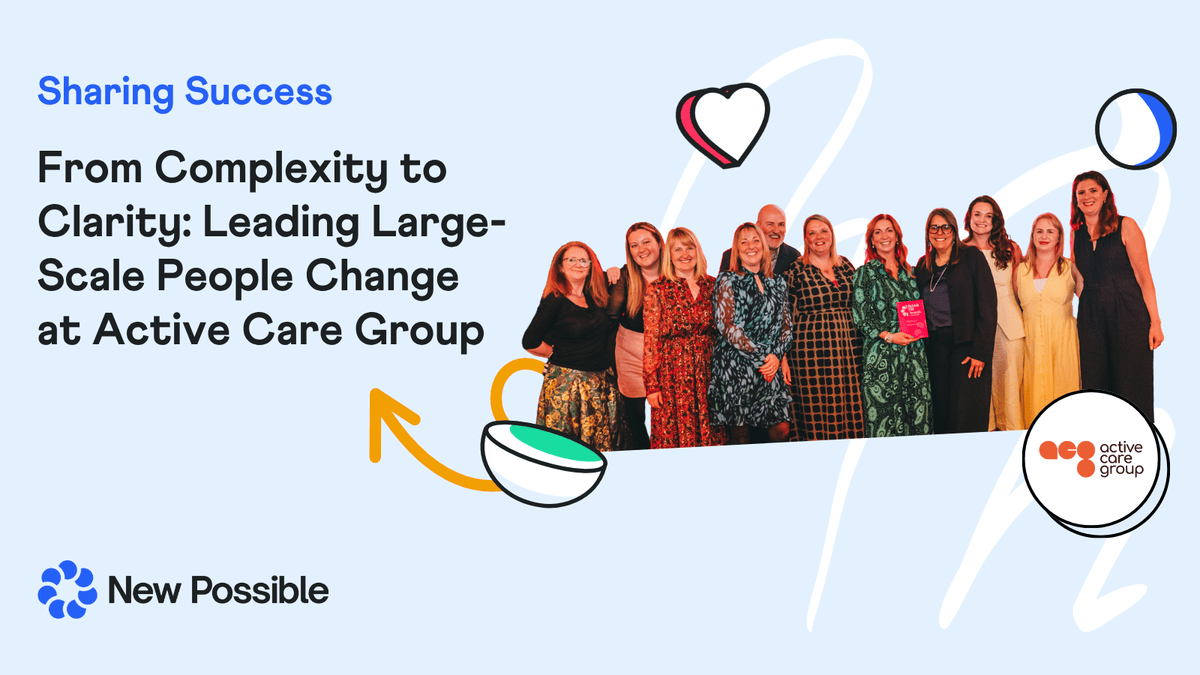
Continuing with our Sharing Success series, we interview British HR Awards 2026 Winners to shine a light on the inspiring projects that are improving workplaces across the UK and beyond. In this article we chat with Karen Langton from Active Care Group, winners of the ‘People Team of the Year (>2,500 employees)’ category.
Introducing Karen Langton
Karen has been with Active Care Group (ACG) for five years as Chief People Officer, leading the People & Culture function across HR Operations, Learning & Development, Talent Acquisition & Onboarding, and Internal Communications & Engagement. She has more than 20 years’ experience in HR across a range of industries, with the last 11 years spent in private healthcare.
Karen mentioned: “What I enjoy most about my role at ACG is helping shape an organisation that is genuinely people-focused, both for our colleagues and for the people we look after. Over the last few years, our People Team has led a significant transformation agenda across the business, focused on creating greater consistency, fairness and simplicity for colleagues while enabling our operational teams to deliver outstanding care.”
About Active Care Group
Active Care Group (ACG) is the UK’s pioneering provider of complex care, with more than 30 years' multi-award winning experience supporting people with the most complex rehabilitation and care needs.
ACG delivers a fully integrated care pathway, combining clinical expertise, therapeutic support and rehabilitation across specialist hospitals, neurological rehabilitation centres, residential services, supported living, case management, expert witness services and care in the home. They are the only provider in the UK able to take an individual from hospital-level intensive rehabilitation through to clinically led care in the home, within a single organisation; managing a broad range of complex conditions including acquired brain injury, spinal injury, strokes, other neurological conditions, epilepsy, mental health, learning disabilities, autism, and respiratory needs.
ACG is deeply people-focused, supporting those in its care to achieve independence while also investing in the development, wellbeing and careers of its high‑performing colleagues, creating a compassionate and empowered workforce.
Creating a fairer and more consistent colleague experience
Over the past 12 months, ACG has delivered one of its most significant people transformation programmes to date: the harmonisation of terms and conditions for 2,500 colleagues across more than 60 services nationwide.
Following rapid growth through acquisition, the organisation inherited multiple legacy employment frameworks, resulting in multiple inconsistencies such as contracted hours, shift patterns, enhancements and pay periods for similar roles and services. In response, the People Team launched a two-year transformation programme aimed at creating greater fairness, simplicity, and operational consistency.
We asked Karen, what prompted Active Care Group to undertake such a large-scale harmonisation of terms and conditions, Karen explained:
“ACG had grown significantly through acquisition but as a result we ended up with lots of different legacy terms, payroll arrangements and ways of working across the Group. While that brought strengths, it also created complexity and confusion for colleagues and managers.
We knew that if we wanted to improve the colleague experience and simplify operations, we needed a more consistent approach. The programme was really about creating greater fairness and clarity around things like pay, contracted hours and career pathways.
The changes delivered real benefits across the organisation. Colleagues gained greater security and predictability through salaried contracts and aligned overtime arrangements. Managers benefited from clearer workforce planning and more consistent staffing models. The business also became more agile, making it easier for colleagues to move between services and for teams to work in a more joined-up way.”
Transforming terms, pay and workforce structures
Delivered across three phases alongside the introduction of a new HR, payroll, and rostering system, the programme focused on modernising and simplifying core employment structures across the organisation.
Key changes included:
- FTE Alignment: Reduced 91 contracted hour variations into two standardised options
- Payroll Harmonisation: Transitioned 1,300 colleagues from four-weekly to monthly pay
- Pay Structure Transformation: Moved employees from hourly pay to salaried contracts, providing greater income stability and transparent overtime payments
- Role Clarity: Simplified 55 job titles into a consistent framework to support progression, recruitment, and workforce understanding
- Shift Alignment: Introduced two core shift patterns and standardised overtime rates to improve rostering efficiency and reduce scheduling pressures
What challenges did Active Care Group encounter during the process, and how did they overcome them?
Karen commented: “The biggest challenge was the level of complexity we were starting from. We had different systems, processes and legacy terms in place across the Group, alongside inconsistent data and ways of working.
At the same time as delivering the harmonisation programme, we were also implementing a new HR and Payroll system, so there were a lot of moving parts to manage.
Another important focus was making sure colleagues felt properly supported through the consultation process. We invested a lot of time in training managers, HR teams and colleague representatives so they felt confident having open and informed conversations locally.
One of the biggest factors in the programme’s success was having dedicated project resource and strong collaboration between HR, Payroll, Finance and Operational teams. That helped us keep momentum, respond quickly to questions and deliver the changes in a consistent way across the organisation.”
A people-first approach to change
A defining feature of the programme was its highly collaborative and people-focused consultation strategy. More than 60 colleague representatives were nominated and elected by peers to support communication and engagement. Representatives received dedicated training and ongoing support, helping to build trust and ensure consistency across services.
Each consultation period included multiple communication touchpoints, FAQs, dedicated support channels, and a consultation hub hosted on the organisation’s colleague app, ECHO. Impacted employees could access real-time updates, documentation, and guidance throughout the transition.
When asked why adopting a people-first consultation approach is essential to delivering change at this scale, Karen highlighted: “We knew this level of change would only work if colleagues felt involved, informed and listened to throughout the process. It was really important to us that people didn’t feel change was simply being ‘done to them’.
We focused heavily on communication and engagement from the start. Managers received support and guidance early on, and colleague representatives played an active role throughout the consultation process.
We also made sure colleagues could access information directly through our ECHO app, including updates, FAQs and supporting documents, so communication stayed open and consistent.
Throughout the programme, we tried to be honest and transparent about the changes and give people the opportunity to ask questions and have meaningful conversations about what the changes meant for them personally.”
Delivering measurable business and people impact
The programme delivered significant operational, financial, and employee experience improvements across the business, there were significant savings achieved through aligned shift patterns and reduced payroll errors. Agency spend was significantly reduced now representing just 2.6% of labour costs. We also saw colleague turnover reduce from 27.4% to 21.9% during the period.
Importantly, the transformation was delivered without a single grievance, appeal, tribunal, or increase in turnover, highlighting the effectiveness of the engagement strategy and the credibility of the People Team’s leadership.
Through this large-scale transformation, Active Care Group has created a fairer, more transparent, and more consistent colleague experience - strengthening workforce stability while supporting the delivery of outstanding care nationwide.
What advice would Karen give to other organisations managing large‑scale, people‑focused change programmes?
“My biggest advice would be to invest time upfront in planning, engagement and communication. For us, having a clear plan, strong governance and dedicated resource made a huge difference to keeping the programme on track.
It was also really important that managers and colleague representatives felt confident leading conversations locally, so we invested a lot of time in training, guidance and ongoing support throughout the process.
We found that open, consistent communication helped build trust and maintain momentum. Using platforms like ECHO meant colleagues could access updates, FAQs and information directly, rather than relying purely on cascade communication.
Most importantly, remember that large-scale change is never just about systems and processes — it’s about people. When colleagues feel informed, listened to and supported, even complex transformation programmes can be delivered in a positive and successful way.”
Overall, the judges praised the 'hugely laudable and well managed change'.
The British HR Awards is powered by New Possible, an employee insight platform that's committed to your success. New Possible helps leaders build healthier organisations by providing meaningful insight that can drive real change. Find out more about our mission or book a demo.